
Humanity Didn't Come From a Single People: What DNA Revealed About Our Origins
28 April 2026
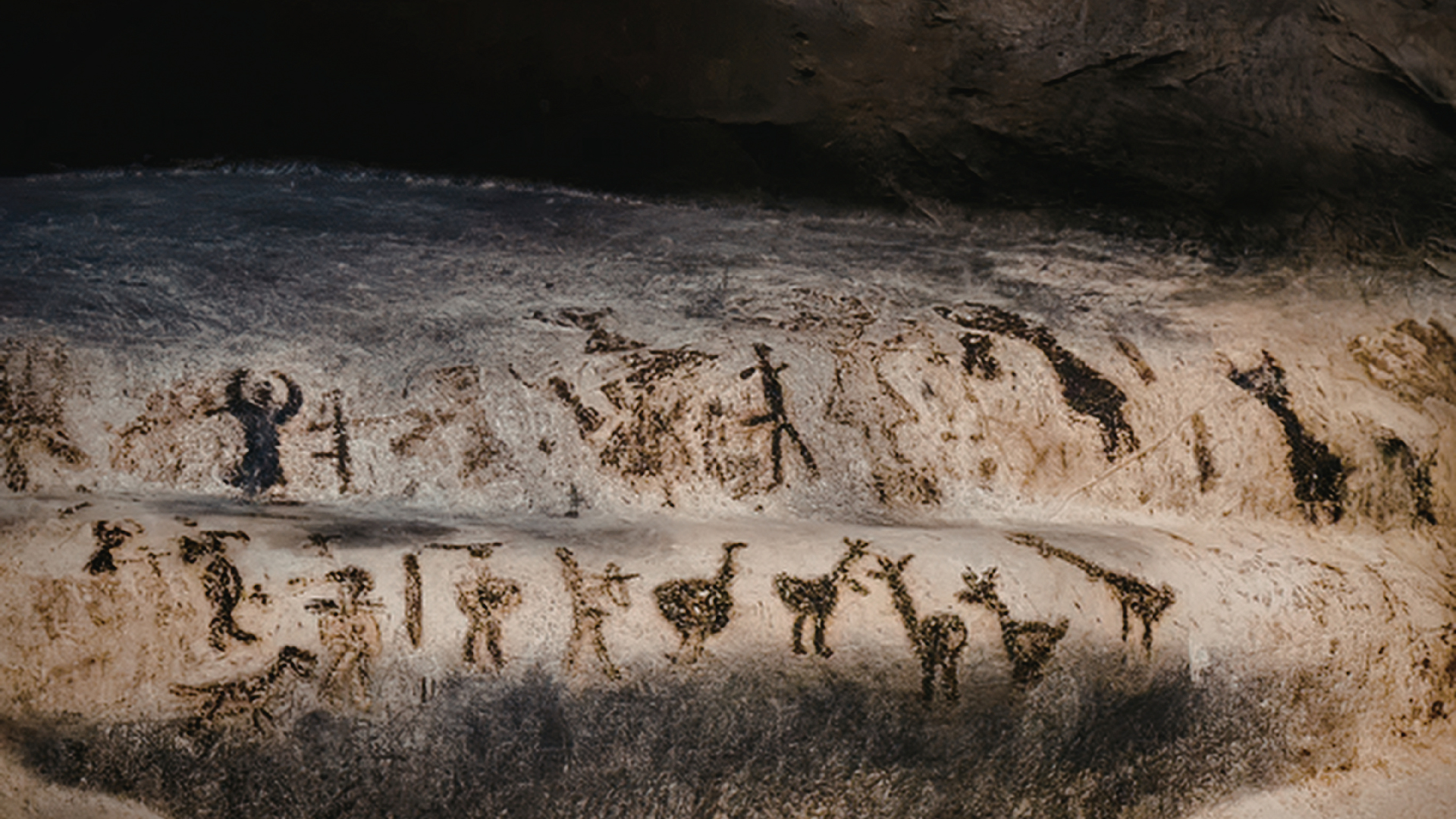
A study published in Nature overturned the theory that Homo sapiens emerged from a single African population, and the new picture is far more complex and fascinating.
For a long time, the most widely accepted explanation was that, around 150,000 years ago, somewhere in Africa, a group of people arose that gave rise to all of humanity. That group grew, spread across the continent, and gradually colonized the entire world. This theory became known as the Recent African Origin model, or, in its more popular form, Out of Africa, and it was supported by fossil evidence and studies of mitochondrial DNA (genetic material passed down exclusively through the maternal line).
But a large-scale genetic study recently published in Nature and widely covered worldwide showed that this story was incomplete. Human origins were not a single point on the map, but something far closer to a web.
What the Scientists Found
The research was led by Brenna Henn of the University of California, Davis, and Simon Gravel of McGill University in Canada. The team analyzed the genetic material of 290 people from populations across southern, eastern, and western Africa. They also, for the first time, sequenced the genomes of 44 individuals from the Nama people, an indigenous population of southern Africa with an unusually high degree of genetic diversity.
What the data showed looked very different from the old model. Rather than a single lineage from which all humans descend, the study points to multiple human populations that lived in distinct regions of Africa, mingled, separated, and mingled again over hundreds of thousands of years.
In practice, there was no single cradle of humanity; there were several, and they were in constant contact with one another. The genetic differences between these groups were about as small as those found among human populations today, which explains why fossils discovered in distant parts of Africa share similar physical characteristics.
A Story That's Harder to Tell
The old model had a certain simplicity that made it easy to understand and to communicate: one origin, one starting point, a story that moves in a straight line. The new model is messier, full of back-and-forth.
Brenna Henn, professor of anthropology at UC Davis and one of the researchers behind the study, sums up the significance of the finding well: "We are presenting something that people have never tested before. This moves anthropological science forward in a meaningful way."
Tim Weaver, also at UC Davis and a specialist in human fossils, adds: "More complex earlier models proposed contributions from archaic hominins, but this model points in the opposite direction." In other words, we don't need to invoke unknown populations to explain human genetic diversity — the internal structure of ancestral populations themselves is enough to account for it.
The shift science now needs to make is essentially one of mental image: stop thinking about human evolution as a tree, with a single trunk and branching limbs, and start thinking of it as a network, with pathways that cross, diverge, and reconnect over and over again.
The Nama People and What Remains to Be Discovered
The decision to include Nama genomes was a key element of the study. The Nama are part of the Khoisan peoples of southern Africa, who carry the greatest genetic diversity of any living humans, making their DNA a privileged window into the species’ most distant past. The samples were collected between 2012 and 2015 from saliva provided by residents of local villages.
With that data in hand, the researchers determined that the oldest detectable split between human populations still visible in people today occurred between 120,000 and 135,000 years ago. Before that, two or more groups of Homo lived interconnected, exchanging genes for hundreds of thousands of years. And even after that split, contact continued.
The researchers calculated that only 1% to 4% of the genetic differences found among today's human populations stem from variation between those ancestral groups. This confirms that early humans were physically very similar to one another, regardless of where in Africa they lived.
That said, much remains to be discovered, and one of the biggest gaps is the scarcity of ancient African DNA. While we already have sequenced genomes from Neanderthals and Denisovans, thanks to fossils recovered in Europe and Asia, genetic material from ancient Africans remains sparse, and that limits how precise our models can be. Weaver notes, for example, that fossils like Homo naledi probably did not contribute to the lineage of modern Homo sapiens, but confirming that will require far more data.
—
References
MCGILL UNIVERSITY. A new understanding of human origins in Africa. Montreal: McGill Newsroom, May 17, 2023. Available here. Accessed: Apr. 27, 2026.
O CAFEZINHO. Pesquisa genética redefine origem da espécie humana: Homo sapiens nasceu de várias populações africanas interligadas. Apr. 26, 2026. Available here. Accessed: Apr. 27, 2026.
RAGSDALE, Aaron P. et al. A weakly structured stem for human origins in Africa. Nature, vol. 617, no. 7962, pp. 755–763, 2023. DOI: 10.1038/s41586-023-06055-y. Available here. Open access via PMC: https://pmc.ncbi.nlm.nih.gov/articles/PMC10208968/. Accessed: Apr. 27, 2026.
SCIENCEDAILY. DNA research just rewrote the origin of human species. Apr. 26, 2026. Available here. Accessed: Apr. 27, 2026.
SMITHSONIAN MAGAZINE. DNA suggests modern humans emerged from several groups in Africa, not one. Washington: Smithsonian Institution, 2023. Available here. Accessed: Apr. 27, 2026.
UC DAVIS. New UC Davis research using DNA changes origin of human species, researchers suggest. Davis: UC Davis News, May 17, 2023. Available here. Accessed: Apr. 27, 2026.
See also

Copyright © 2025 | Universo Inspira