
The Current That Regulates the Planet's Climate Is Weakening Faster Than We Thought
29 April 2026
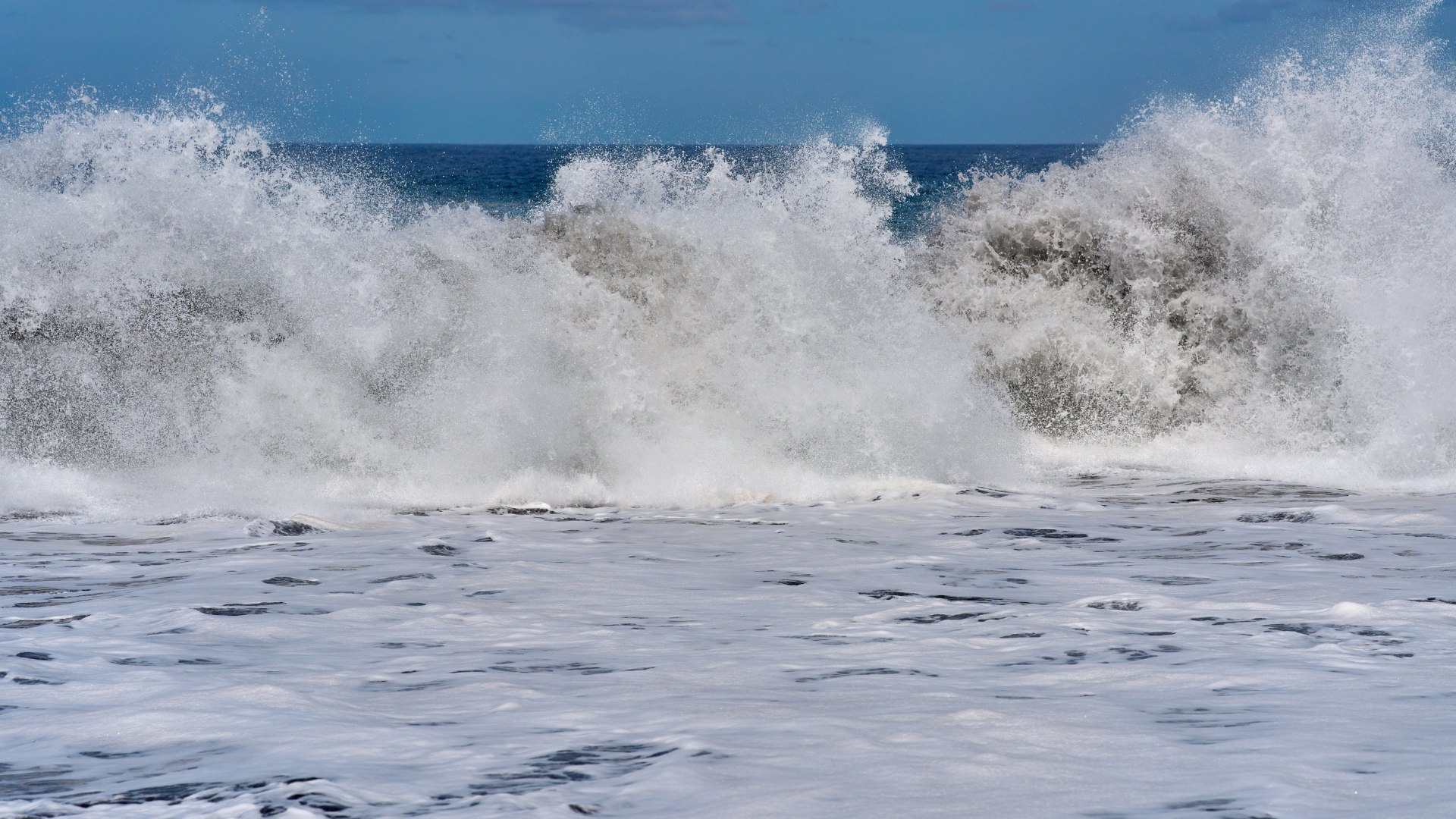
Two studies published in Science Advances confirm that the Atlantic Ocean's main current system is weakening at a rate far beyond what climate models had projected, with direct consequences for Brazil.
Picture a giant conveyor belt running the length of the Atlantic, carrying warm water from the tropics northward and returning cold water from the depths back south. This system, known as the Atlantic Meridional Overturning Circulation, or AMOC, is one of the planet’s primary climate regulators.
It keeps Western Europe’s climate mild, stabilizes rainfall patterns across much of Africa and the Americas, and controls sea levels along the eastern coast of the United States. When it functions well, AMOC distributes heat and moisture evenly between the hemispheres; when it weakens, that balance starts to unravel.
AMOC only began to be continuously monitored in 2004, too short a window to accurately assess a system that takes centuries to complete a single cycle. Two studies published in Science Advances have helped fill part of that gap, and the findings are troubling.
What the New Studies Found
The first study, led by researcher Víctor Portmann and colleagues, combined climate models with real-world ocean temperature and salinity data to project AMOC’s future through the end of the century. The conclusion was that the current is likely to weaken by 42% to 58% before 2100, well above the estimates put forward by the Intergovernmental Panel on Climate Change (IPCC).
The projected weakening is roughly 60% more severe than the average of available climate models, and the models that most closely match observed reality are the most pessimistic. Stefan Rahmstorf, one of the world’s leading experts on ocean circulation, summed up the problem plainly: the pessimistic projections are, unfortunately, the most realistic ones.
The second study went beyond models and drew on two decades of direct measurements collected by sensors placed on the ocean floor at four points along the western boundary of the North Atlantic, from the Caribbean to Canada. The data show that AMOC has been declining consistently over the past twenty years, across all four locations. Shane Elipot, a physical oceanographer at the University of Miami and co-author of the study, noted that this region responds to changes in circulation before they become visible elsewhere in the system, making it an early warning indicator of what lies ahead.
Why Greenland’s Ice Is the Crux of the Problem
AMOC runs on density differences: warm, salty water from the tropics travels along the surface toward the north, where it cools, grows denser, and sinks. From there, that mass of cold water goes back south along the ocean floor, completing the cycle.
The problem is that global warming is accelerating the melting of Greenland’s glaciers, and the freshwater entering the North Atlantic is less dense than saltwater, disrupting the sinking that keeps the current moving. Over time, this process could push AMOC toward a tipping point beyond which recovery would be practically impossible on any human timescale.
The last collapse of AMOC occurred roughly 12,000 years ago and triggered abrupt climate shifts across the entire Northern Hemisphere. Nothing suggests a new collapse would be any less severe.
What Changes for Brazil
The weakening of AMOC is not strictly a European problem. For Brazil, the consequences would be both significant and felt differently across various regions, affecting rainfall patterns and temperature extremes in ways that could impact agriculture, water resources, and ecosystems.
Research published in recent years shows that a significant weakening of AMOC could shift the Intertropical Convergence Zone — the band of rainfall that crosses the tropics — southward. This would increase precipitation in northern and tropical northeastern Brazil, while reducing it across extratropical regions, including parts of the South and Southeast. The Northeast would face more extreme rainfall events, while the La Plata Basin, which covers parts of Rio Grande do Sul, Argentina, and Uruguay, would see heat waves increasing and winter rainfall reducing.
The Amazon, meanwhile, could receive more precipitation in the short term due to AMOC changes, but the benefit might be offset by the negative effects of deforestation and global climate change. Researchers identify the North Brazil Current—which runs along the northeastern coast—as a valuable indicator for detecting AMOC-related changes in the South Atlantic. Monitoring this current is critical, as changes could signal shifts in regional climate that influence not only rainfall patterns but also the broader ecological balance and livelihoods in Brazil's north and northeast.
What Remains Open
The studies advance the conversation, but they don’t close it. Some scientists argue that the most pessimistic models still overestimate the pace of collapse, and that AMOC has self-regulating mechanisms that current models capture imperfectly. David Thornalley, professor of ocean and climate science at University College London, acknowledged that a larger-than-expected weakening is clearly alarming, but stressed that the results are far from the final word on the subject.
Even so, one study confirms that the decline is already underway; the other shows that the projections available so far have been underestimating its extent. Together, they strengthen the case that countries need to prepare for more severe scenarios than those they have been working with.
—
References
CNN. A vital system of Atlantic Ocean currents is weakening and closer to collapse than thought, new studies find. Apr. 16, 2026. Available here. Accessed: Apr. 27, 2026.
LIVE SCIENCE. 'Nations need to prepare now': Key Atlantic ocean current is much closer to collapse than scientists thought. 2026. Available here. Accessed: Apr. 27, 2026.
MARCELLO, F. et al. Forced changes in Atlantic overturning are distinctly fingerprinted by South Atlantic western boundary transports. Communications Earth & Environment, vol. 7, no. 184, 2026. DOI: 10.1038/s43247-026-03282-9. Available here. Accessed: Apr. 27, 2026.
MECCIA, V.; BLÁZQUEZ, J. Impacts of a reduced AMOC on the South America mean climate and extremes. Journal of Geophysical Research: Atmospheres, 2025. DOI: 10.1029/2025JD044103. Available here. Accessed: Apr. 27, 2026.
PHYS.ORG. Atlantic current shows decade-long decline in deep ocean measurements — coverage of the study: XING, Qianjiang et al. Meridionally consistent decline in the observed western boundary contribution to the Atlantic Meridional Overturning Circulation. Science Advances, 2026. Available here. Accessed: Apr. 27, 2026.
PORTMANN, Víctor et al. Observational constraints project a ~50% AMOC weakening by the end of this century. Science Advances, vol. 12, no. 16, 2026. Available here. Accessed: Apr. 27, 2026.
See also

Copyright © 2025 | Universo Inspira