
Guided Learning
Electrodynamics
Area: Science
Theme: Electricity – electrical circuits
Grade: 9th grade
Estimated time: ⏱️ 2 classes
👁️ Observation · 🔍 Investigation

Letter to the User
Guided Learning – Inspire Universe
Welcome to Inspire Universe's Guided Learning.
The Guided Learning tracks were created to help you organize your studies, deepen your understanding of the content, and turn scientific concepts into hands-on learning experiences.
Each track brings together structured activities, experiments, challenges, reflections, and investigative tasks that can be used in two ways:
- By the teacher, as a support tool for planning and delivering classroom activities;
- By the student, as a step-by-step study guide for learning inside and outside of school.
Here, learning goes beyond watching or reading: you are invited to observe, test, measure, compare, calculate, reflect, and connect ideas — developing essential scientific skills such as critical thinking, curiosity, and intellectual independence.
The activities were organized into thematic tracks, written in clear, accessible language, and designed to accompany you at every stage of your learning path, from your first contact with the topic to mastering the content.
At the end of each track, we invite you to keep exploring:
- Completing the quizzes available in the app.
- Revisiting the digital content.
- Deepening your understanding of the Universe and the scientific phenomena that surround us.
About the Use of This Material
This material is made available exclusively for educational use within the Inspire Universe platform.
Reproduction, distribution, commercialization, or sharing of this content, in whole or in part, by any means, without express authorization, is prohibited.
The responsible use of this material ensures that the educational, editorial, and scientific work involved in its creation is properly valued and allows us to continue developing new tracks, content, and learning experiences for you.
Evobooks Team
What will you learn?
You will understand what an electrical circuit is, how electrical current flows, what components are needed for electricity to work, and how this phenomenon shows up in your everyday life.
Why does this matter?
Electricity is present in almost everything around us: light bulbs, cell phones, refrigerators, computers, and countless other devices we use every day. Understanding how it works helps you:
- better understand the devices you use daily,
- use electrical energy more consciously,
- and develop scientific thinking by connecting theory and practice.
Step 1 — Exploring
Electrical Circuits in Everyday Life
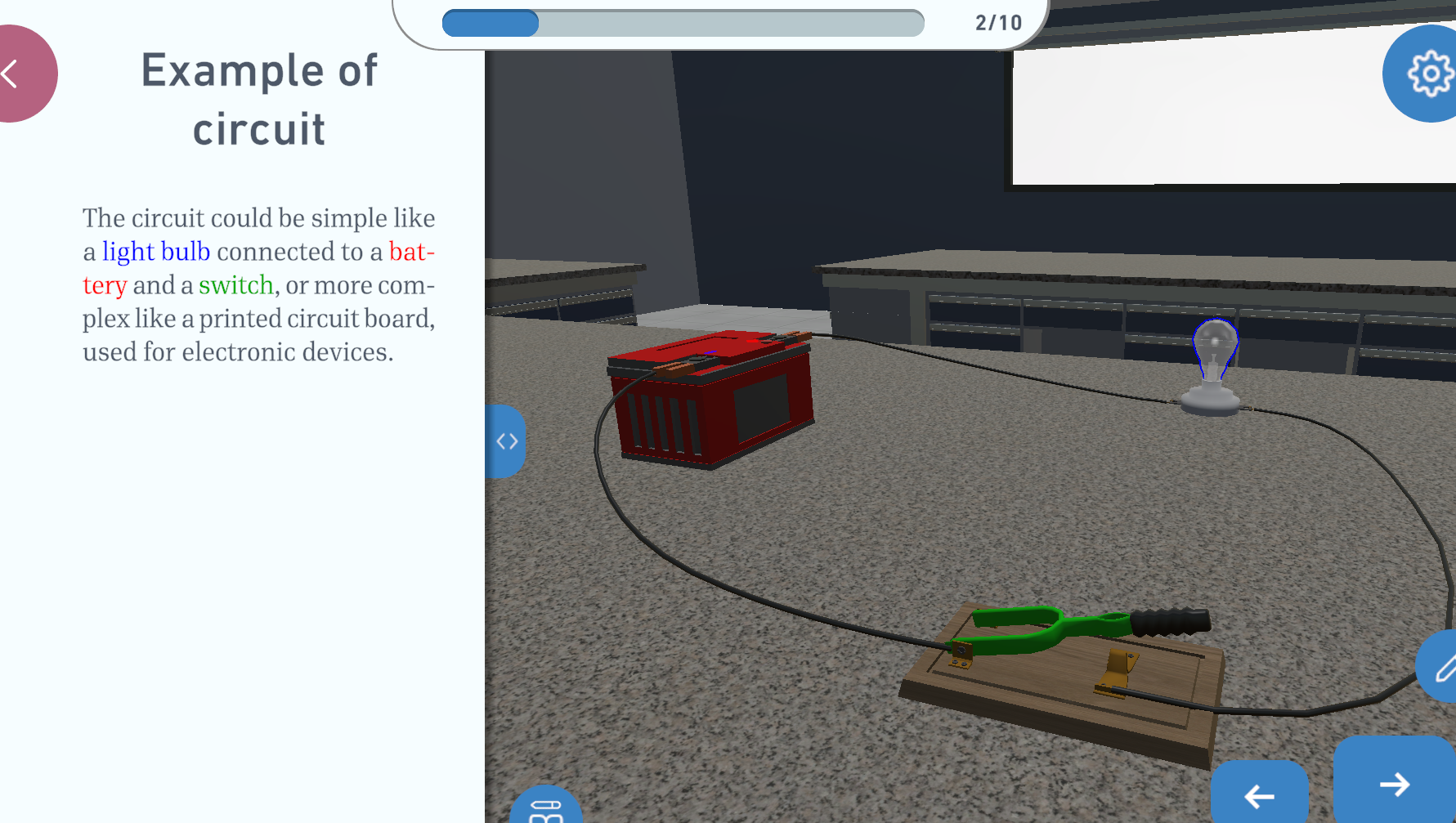
Look around you: your home, your school, the street.
Think about this:
- What happens when you flip a light switch?
- Why does the light bulb turn on?
- What would happen if a wire were disconnected?
Now, open the Inspire Universe app and explore the electrical circuit visualization. Notice the wires, the energy source, and the light bulb all working together.
Keep in mind: electricity only works when there is a complete path for the electrical current to flow through.
💡 Teacher's tip:
Before any theoretical explanation, encourage students to describe what they notice in the digital circuit: "Where does the electricity go?" and "What happens when the circuit is interrupted?" This moment is essential for activating prior knowledge.“Por onde a eletricidade passa?”
Step 2 — Investigating
What Is Electrical Current?
Now that you have already explored a working circuit, it is time to investigate how electricity really behaves.
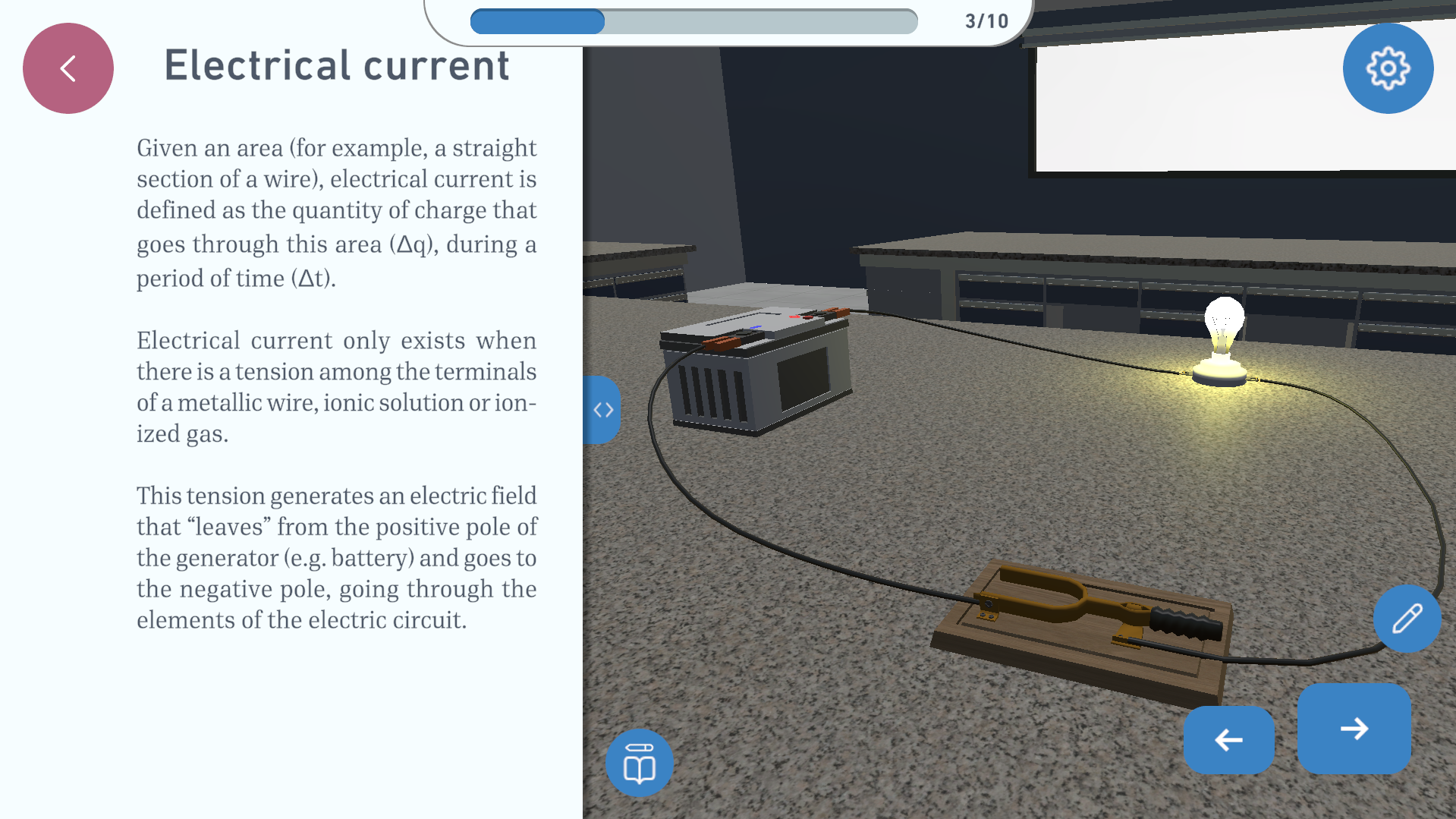
Think about this:
- Does electricity appear on its own?
- What makes electrical current start flowing?
- Does it flow in any situation?
Individually or in groups, research: under what conditions can electrical current flow through a circuit?
Research tip: Use keywords such as "electrical current," "simple electrical circuit," and "conditions for electrical current."
Write down your findings and be ready to share them with the class.
(After your research) For electrical current to exist, the following conditions must be met:“
- There must be an energy source (such as a battery or power outlet).
- There must be a closed path made up of conducting wires.
- The components must be correctly connected.
Without these conditions, electricity does not flow.
💡 Teacher's tip:
Use this moment to discuss what makes a reliable source of scientific information, the difference between common-sense and scientific explanations, and the importance of justifying answers based on observation and research.
Step 3 — Experimenting
Building a Simple Electrical Circuit
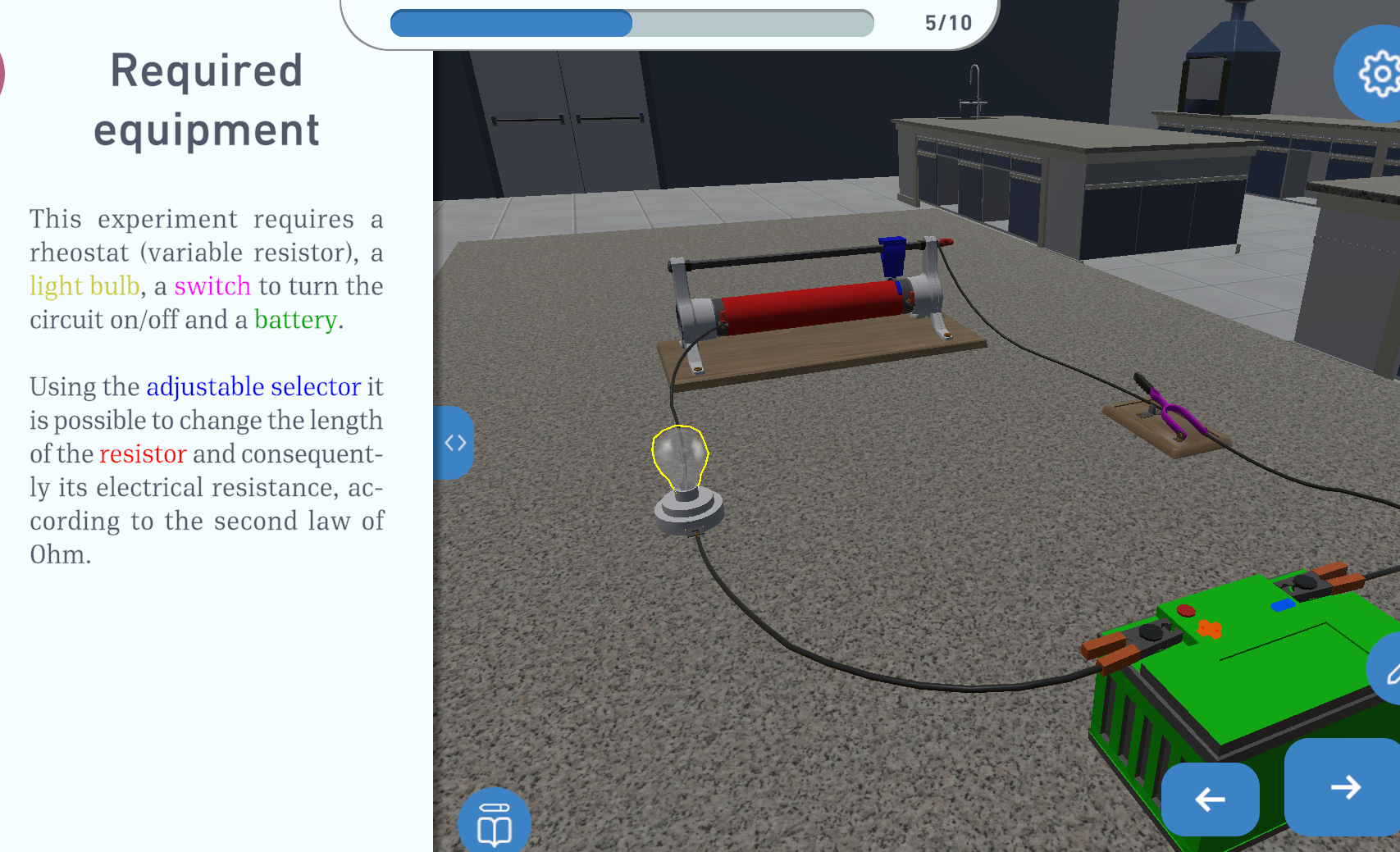
In the Inspire Universe app, follow the digital electrical circuit or, if available, use physical materials to build a simple one. Either way, you will verify in practice when electrical current flows.
Circuit components:
- Energy source (battery or cell)
- Conducting wires
- Light bulb
- Switch
Pay close attention:
- What happens when the switch is open?
- What changes when the switch is closed?
- Does the light bulb turn on in every situation?
Record your observations.
Take note:
- In which situation does electrical current flow?
- What prevents current from flowing when the circuit does not work?
These answers will help you in the next step.
💡 Teacher’s tip:
During the activity, encourage students to test hypotheses ("What if I remove a wire?"), describe what happens before and after each change, and connect the experiment to everyday situations (the classroom light, a phone charger).
Step 4 — Analyzing and Understanding
When Does Electrical Current Exist?
After exploring different situations and comparing when electricity works and when it does not, it is time to analyze what is really happening.
Electrical current is the movement of electrical charges that occurs only when the circuit is closed.
This means electricity requires:
- An energy source (such as a battery or power outlet)
- Conducting wires
- A complete path to flow through
If any of these parts is missing or interrupted, electrical current does not flow.
The direction of electrical current
By convention, electrical current is said to flow from the positive pole to the negative pole of the source. This is known as the conventional direction of current, and it is used to simplify the study and representation of electrical circuits.
Step 5 — Leveling Up
Exercise
Time to put what you have learned about electrical circuits to the test.
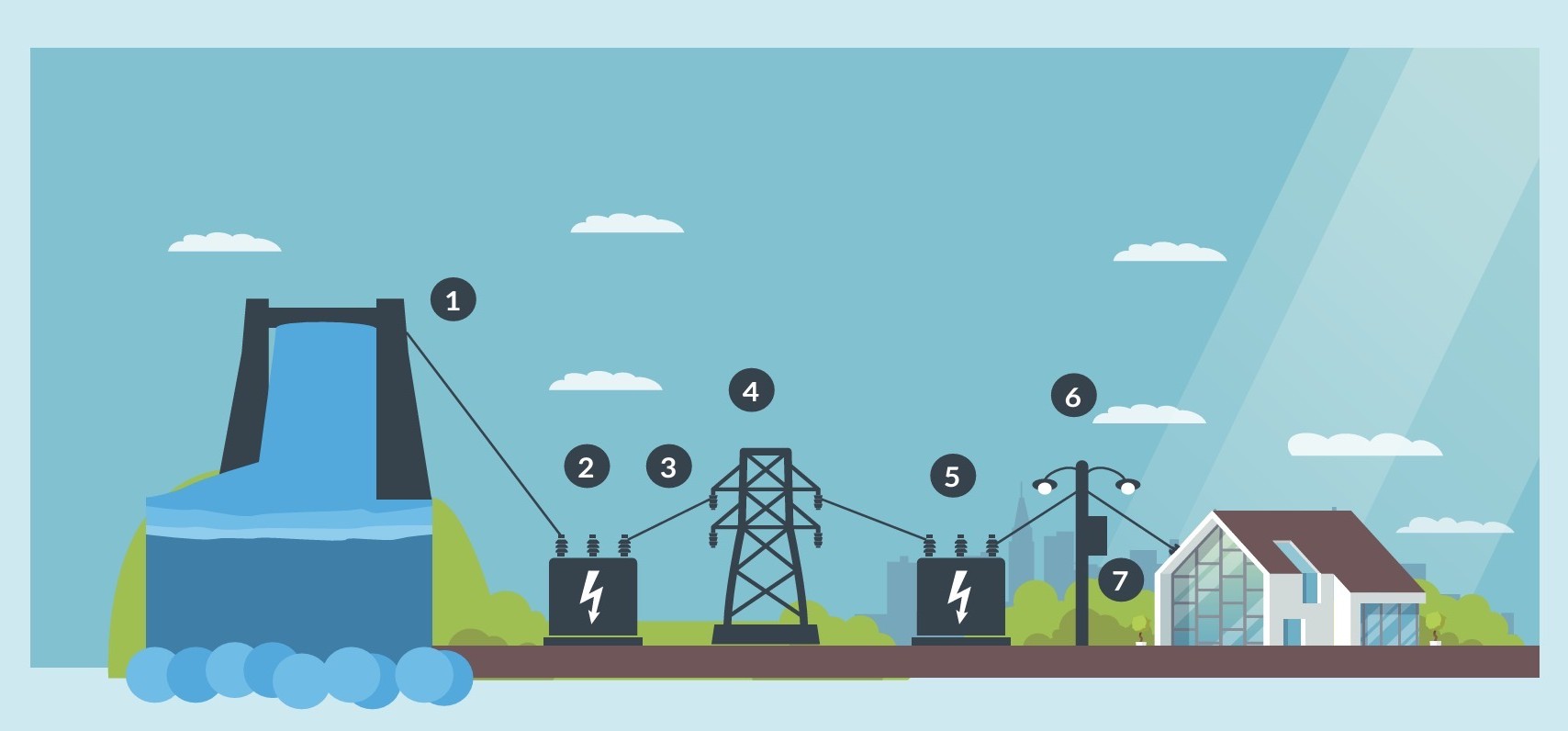
Answers
- a) Electrical current. b) Positive.
- (1) Hydroelectric power plant; (2) Transformer; (3) Transmission line; (4) Power tower; (5) Transformer; (6) Transmission line; (7) Neighborhood transformer.
Step 6 — Comparing and Reflecting
Electricity in Different Situations
Now that you understand when electrical current exists, let's compare everyday situations and reflect on how electricity works.
Analyze the three situations:
- In the first, the light bulb turns on.
- In the second, the device does not work.
- In the third, compare a closed circuit and an open circuit.
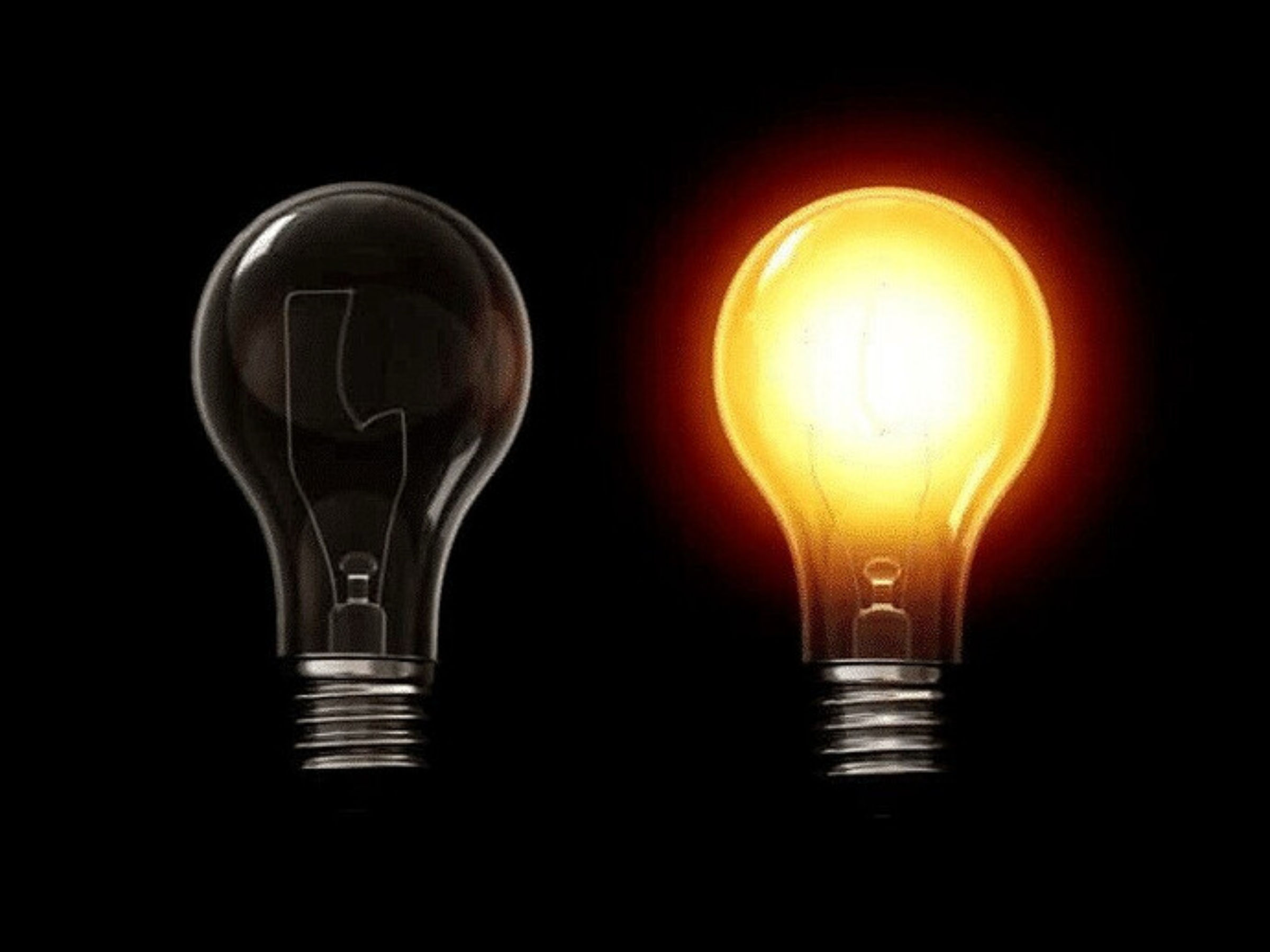
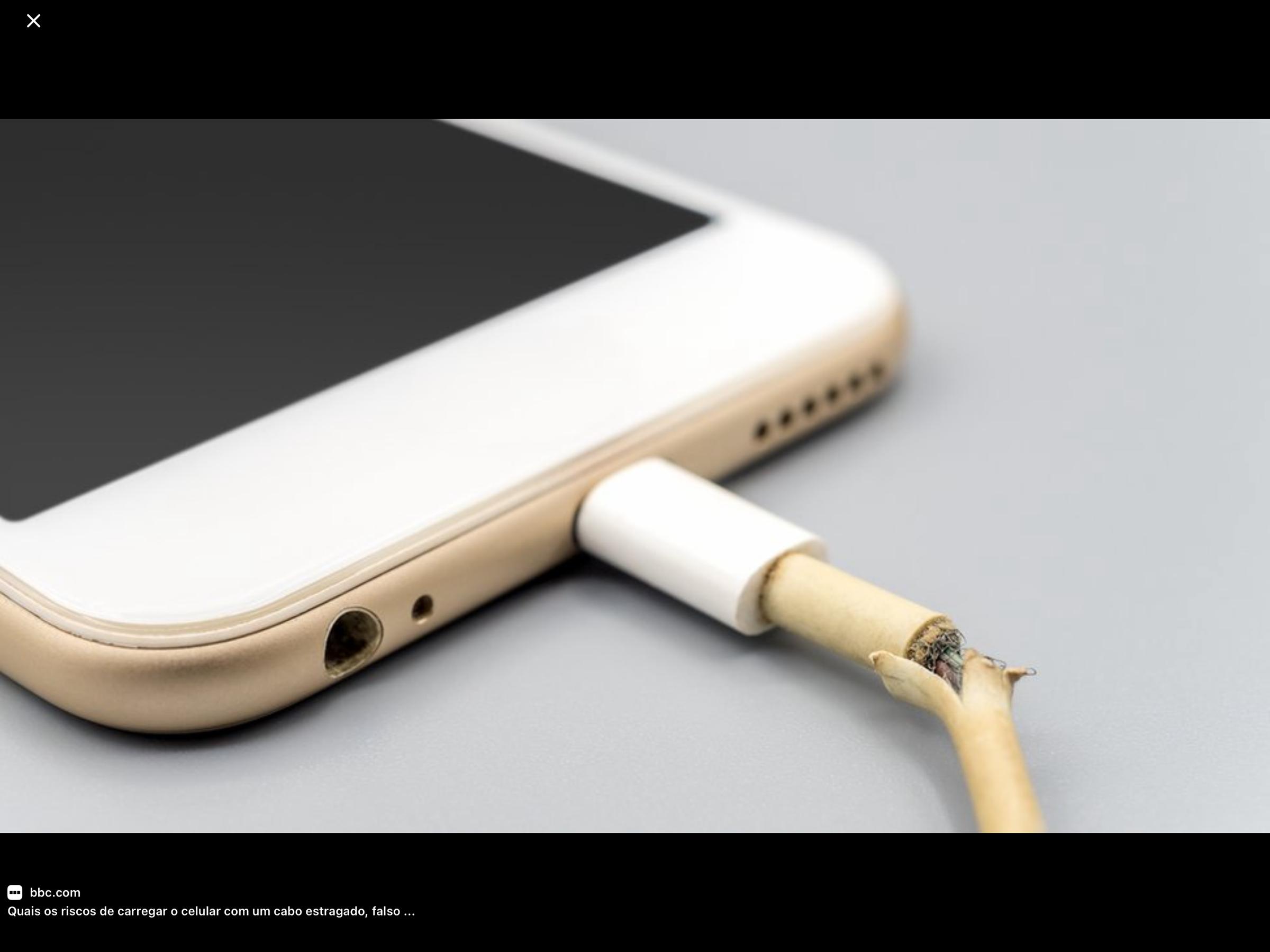
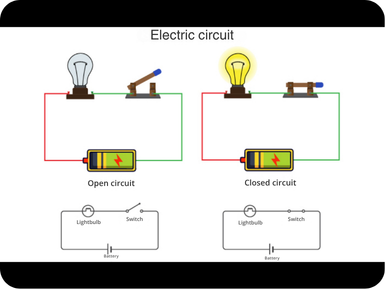
Think about this:
- In which situation does electrical current manage to flow?
- What prevents electrical current from flowing in the other situations?
Connection to everyday life
Now examine your home or school and answer:
- What could prevent a light bulb from turning on?
- What could stop a device from working even when it is plugged in?
💡 Teacher’s tip:
Wrap up by returning to the opening question of the track: "What is needed for electricity to work?" Value the answers students have built throughout the steps, reinforcing the idea of a complete path for electrical current.
Throughout this Guided Learning experience, you:
- Observed everyday situations involving electricity.
- Investigated when electrical current exists.
- Compared different scenarios.
- Understood the importance of a closed circuit for electricity to work.
This journey shows how science uses observation, comparison, and reflection to explain everyday phenomena.
👉 Want to keep learning?
Access the quizzes in the app and test your knowledge about electricity and electrical circuits on Inspire Universe.
This material is protected by copyright. Reproduction, distribution, or sharing, in whole or in part, without authorization from Inspire Universe, is prohibited under Brazilian Copyright Law (Law No. 9,610/1998).

Copyright © 2025 | Universo Inspira