
Guided Learning
The Water Cycle
Area: Science
Theme: The Water Cycle
Grade: 6th grade
Estimated time: ⏱️ 2 classes
👁️ Observation · 🔍 Investigation
Letter to the User
Guided Learning – Inspire Universe
Welcome to Inspire Universe's Guided Learning.
The Guided Learning tracks were created to help you organize your studies, deepen your understanding of the content, and turn scientific concepts into hands-on learning experiences.
Each track brings together structured activities, experiments, challenges, reflections, and investigative tasks that can be used in two ways:
- By the teacher, as a support tool for planning and delivering classroom activities;
- By the student, as a step-by-step study guide for learning inside and outside of school.
Here, learning goes beyond watching or reading: you are invited to observe, test, measure, compare, calculate, reflect, and connect ideas — developing essential scientific skills such as critical thinking, curiosity, and intellectual independence.
The activities were organized into thematic tracks, written in clear, accessible language, and designed to accompany you at every stage of your learning path, from your first contact with the topic to mastering the content.
At the end of each track, we invite you to keep exploring:
- completing the quizzes available in the app,
- revisiting the digital content,
- and deepening your understanding of the Universe and the scientific phenomena that surround us.
About the Use of This Material
This material is made available exclusively for educational use within the Inspire Universe platform.
Reproduction, distribution, commercialization, or sharing of this content, in whole or in part, by any means, without express authorization, is prohibited.
The responsible use of this material ensures that the educational, editorial, and scientific work involved in its creation is properly valued and allows us to continue developing new tracks, content, and learning experiences for you.
Evobooks Team
What will you learn?
By the end of this lesson, you will be able to understand what the water cycle is and why it occurs, identify the main transformations water undergoes in nature, recognize its changes in physical state throughout this process, explain how clouds and rain form, and connect the water cycle to climate, the maintenance of life, and energy production.
Why does this matter?
Water is an essential resource for life on our planet. Understanding how water circulates in nature helps you make sense of everyday phenomena, such as the formation of rain. As you study the water cycle, you will notice that this process is directly connected to:
- the water supply for cities,
- food production,
- the generation of electrical energy,
- and the balance of ecosystems.
Step 1 — Bringing It Close to Home
Have You Ever Stopped to Think About This?
Reflect on the situations below:
- Have you ever noticed that, after after a while, a puddle on the street disappears?
- Or that wet clothes dry out even when no one wipes them?
Now think and discuss:
- Where does that water go?
- Does it really vanish?
Look and reflect
Picture the following situations:
- a glass of water left open on a table,
- a wet sidewalk after rain,
- a lake on a hot day.
What happens to the water in all of these situations?
💡 Teacher's tip:
Before any theoretical explanation, encourage students to describe what they notice in the digital circuit: "Where does the electricity go?" and "What happens when the circuit is interrupted?" This moment is essential for activating prior knowledge.“Por onde a eletricidade passa?”
Suggested answer
In all of these situations, the water gradually decreases over time. This happens because part of the liquid water absorbs heat from the environment and turns into water vapor, mixing with the air, and this invisible vapor is what we call air humidity. This process makes water seem to "disappear" from the surface, but it does not vanish: it transforms, changing its physical state and continuously circulating through nature.
Step 2 — Investigating
Exploring the Water Cycle
Now that you have already explored a working circuit, it is time to investigate how electricity really behaves.
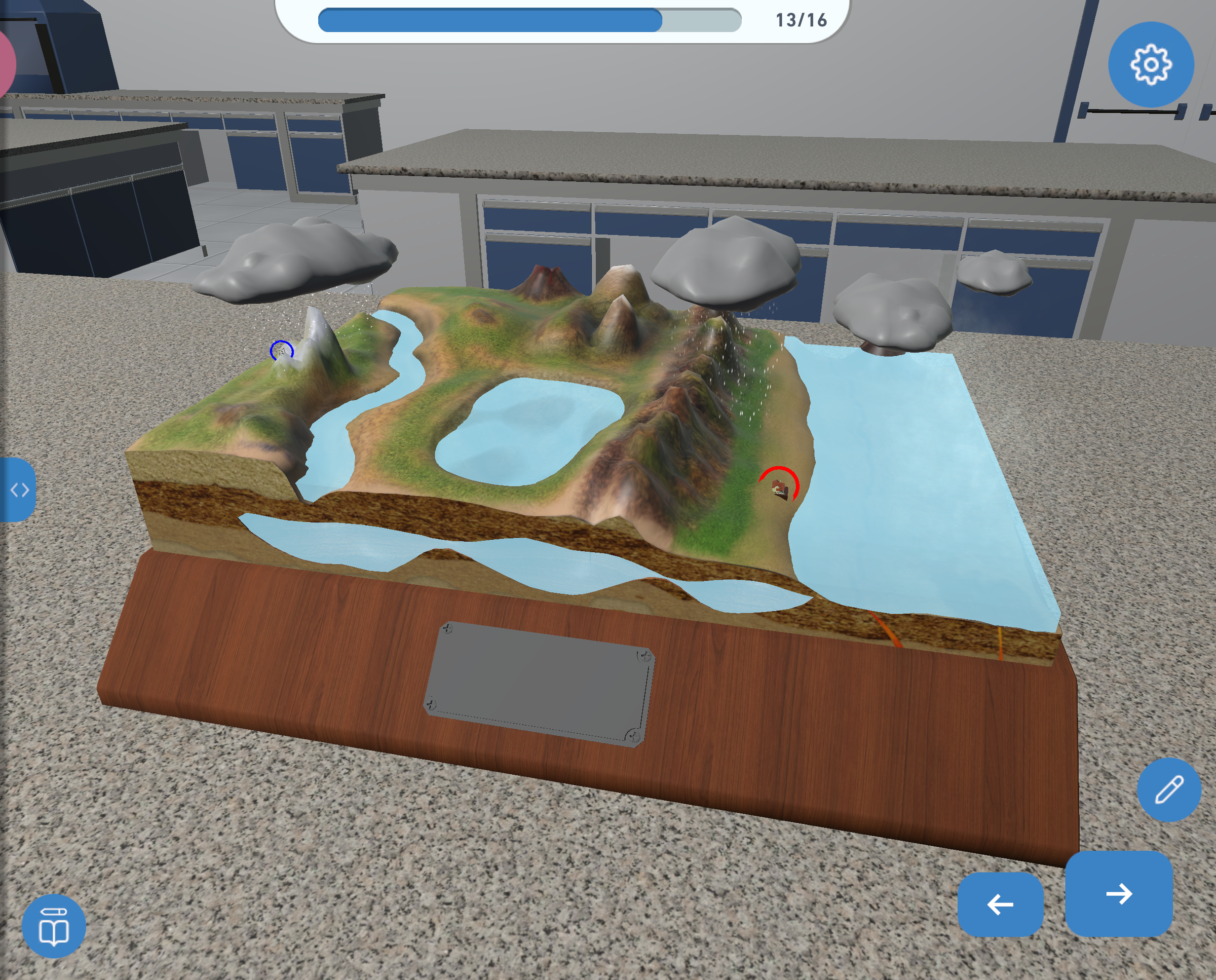
Carefully examine the image or animation of the water cycle available in the app and notice that water is always in motion, passing through different places and changing form along the way.
As you observe, think about:
- Where does rainwater come from?
- Where does water go after it rains?
- Is water always in the same physical state?
Write down your ideas in your notebook or share them with your classmates.
💡 Teacher's tip:
Revisit the hypotheses raised in Step 1, connecting them to the concepts of evaporation and condensation, without going too deep into technical terms just yet.
Step 3 — Building Ideas
The Transformations of Water in the Cycle
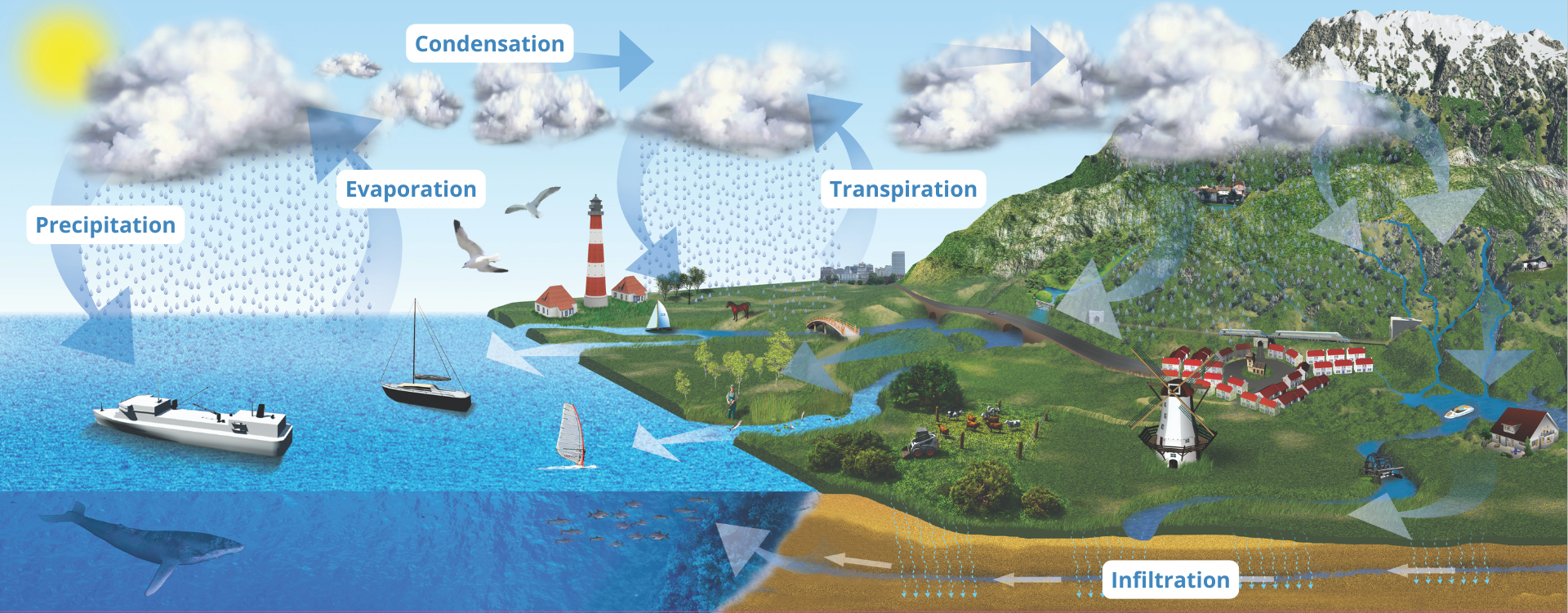
Organize your ideas
Based on what you observed in the app, explain in your own words:
- How does water go from a liquid state to a gaseous state
- What happens to water vapor in the higher regions of the atmosphere?
- What role do plants play in the water cycle?
What about the clouds?
Clouds form when water vapor rises, cools, and condenses into tiny droplets. They can take different shapes and appear at different altitudes, and each type is associated with specific weather conditions. Three of the most common types are:
- Cumulus: white, puffy clouds generally associated with fair weather, but which can grow and produce storms.
- Stratus: horizontal layers of clouds that can cover most of the sky and typically bring light rain or drizzle.
- Cumulonimbus: large, dense clouds associated with heavy storms, lightning, and hail.
💡 Teacher’s tip:
Encourage students to explain the processes using everyday examples, avoiding overly technical formulas or definitions at this stage.
Step 4 — Connecting the Dots
The Water Cycle in Everyday Life and on the Planet
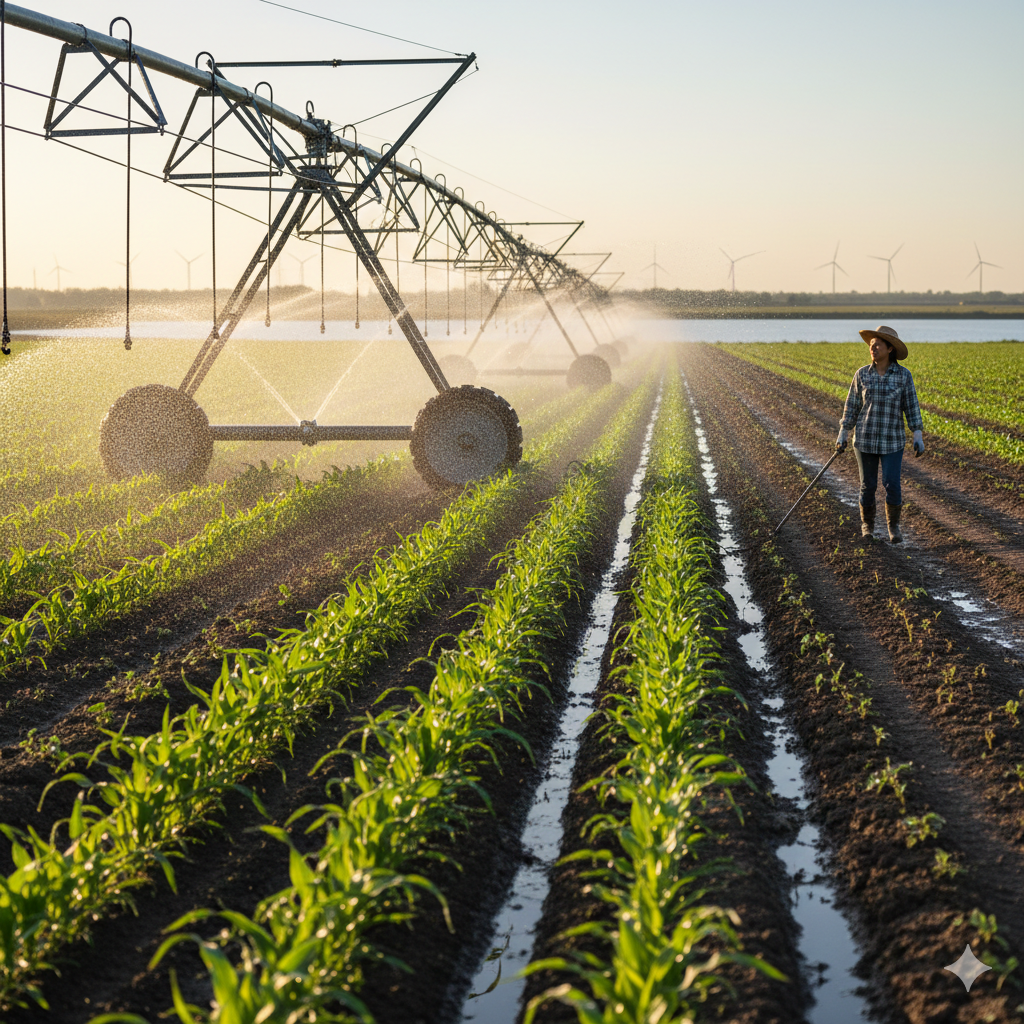
Think about the following situations:
- the water we drink,
- the water used in agriculture,
- the water in rivers and reservoirs.
All of them depend on the water cycle to keep existing.
Reflect:
- What might happen if the water cycle were interrupted?
💡 Teacher’s tip:
Encourage a discussion before presenting the answer, valuing students' hypotheses.
Suggested answer
If the water cycle were interrupted, water would stop renewing itself in nature. This could cause a shortage of drinking water, harm agriculture, reduce the volume of rivers and reservoirs, and directly affect the survival of living beings. Without the water cycle functioning correctly, ecosystems would fall out of balance, threatening life on the planet and all human activities that depend on water.
Going Further (supplementary content)
💡 Teacher’s tip:
If you use this section, lead a conversation that connects the water cycle to current situations, such as drought periods, excess rainfall, or water crises, and value examples brought up by students.
Water and Energy
Rain is crucial for the functioning of hydroelectric power plants. Rainwater replenishes rivers and reservoirs, which store energy as dammed water. When this water flows, it turns turbines and generates electricity. Therefore, prolonged droughts decrease the amount of available water, diminishing the force that drives the turbines and subsequently reducing energy production.
The Impact of Human Activity
Human activities significantly impact the water cycle. For instance, deforestation reduces plant evapotranspiration, which alters cloud formation and rainfall distribution in a region. Additionally, water pollution, overuse of water resources, and the sealing of urban soil hinder water infiltration and affect the replenishment of rivers and aquifers. These changes can lead to droughts, floods, and environmental imbalances, adversely affecting ecosystems and human life.
Reflect:
- How can human actions affect the balance of the water cycle?
Step 5 — Consolidating Your Learning
Thinking Beyond
The water cycle is an essential process for maintaining life on our planet. Taking care of water, preserving forests, and using natural resources consciously helps keep this cycle in balance.
Now, go back to the opening questions, reflect, and explain with your own words:
- Where does the water from a puddle go after a while?
- Why does water return to the surface as rain?
💡 Teacher’s tip:
Return to the hypotheses raised in Step 1 and encourage students to compare their initial answers with the knowledge built throughout the lesson.
Throughout this Guided Learning experience, you:
- observed everyday situations in which water seems to "disappear,"
- understood that water does not vanish but transforms,
- investigated the water cycle and its main stages,
- got to know the main types of clouds and how they form,
- and connected the water cycle to climate, life, and energy production.
Now that you have a better understanding of how the water cycle works, can you see how essential it is for life on Earth?
👉 Want to keep learning?
Access the quizzes in the app and test your knowledge about the water cycle on Inspire Universe.
This material is protected by copyright. Reproduction, distribution, or sharing, in whole or in part, without authorization from Inspire Universe, is prohibited under Brazilian Copyright Law (Law No. 9,610/1998).

Copyright © 2025 | Universo Inspira